


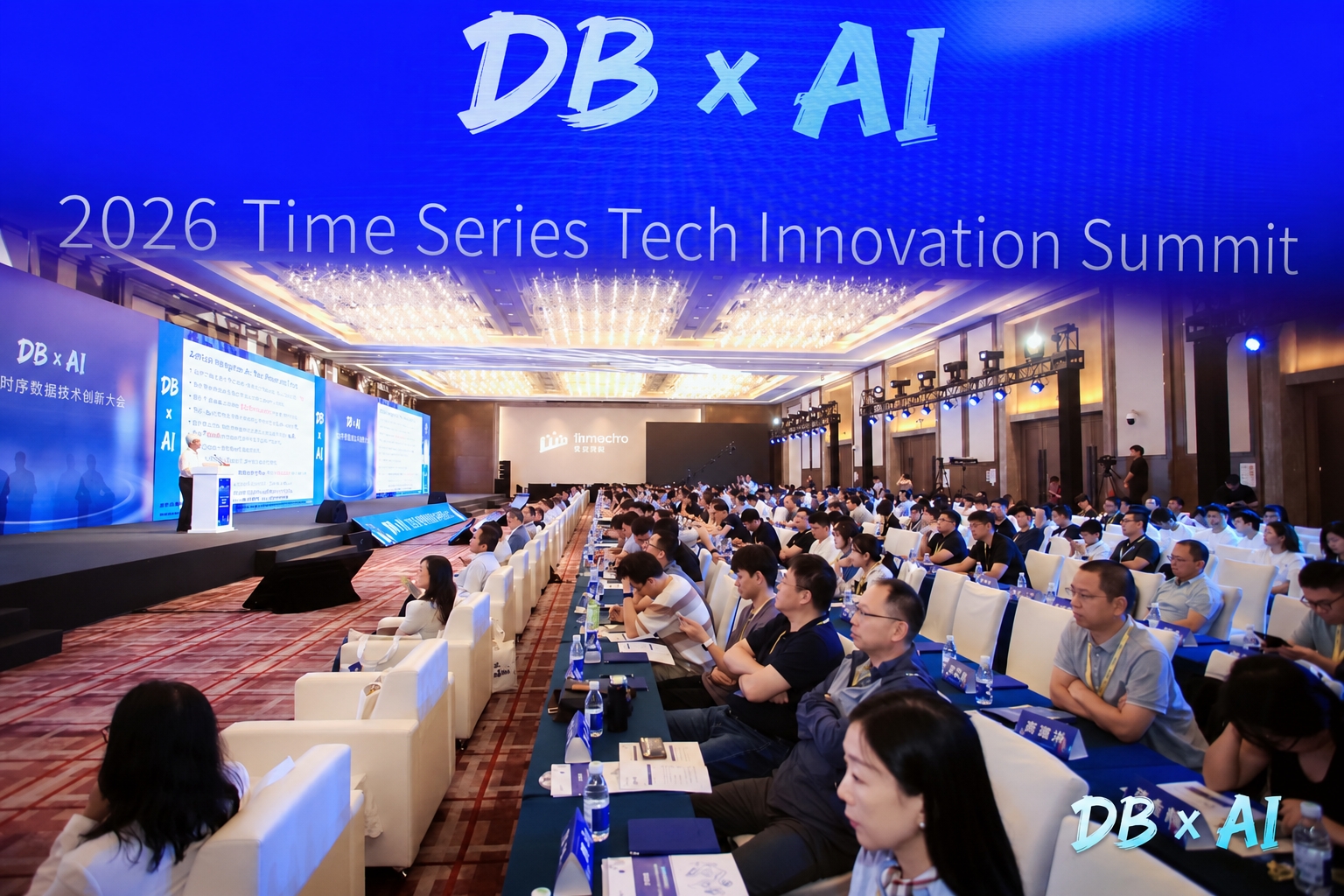
Hosted by the Open Source Technology Committee of the China Institute of Communications and organized by Timecho, the 2026 Time Series Tech Innovation Summit took place on August 22 at Crowne Plaza Beijing Lido.
Centered on the theme DB × AI, the summit featured one main forum, one technical forum, and two case‑study forums. Moving from strategic outlooks and technology deep dives to real-world industry applications, the summit explored how DB × AI innovations can be translated into practical industrial value..
The event drew 504 on-site participants and approximately 180,000 online viewers, bringing together perspectives from academia, industry, and the open-source community.
Opening Ceremony: Data Arrives On‑Site
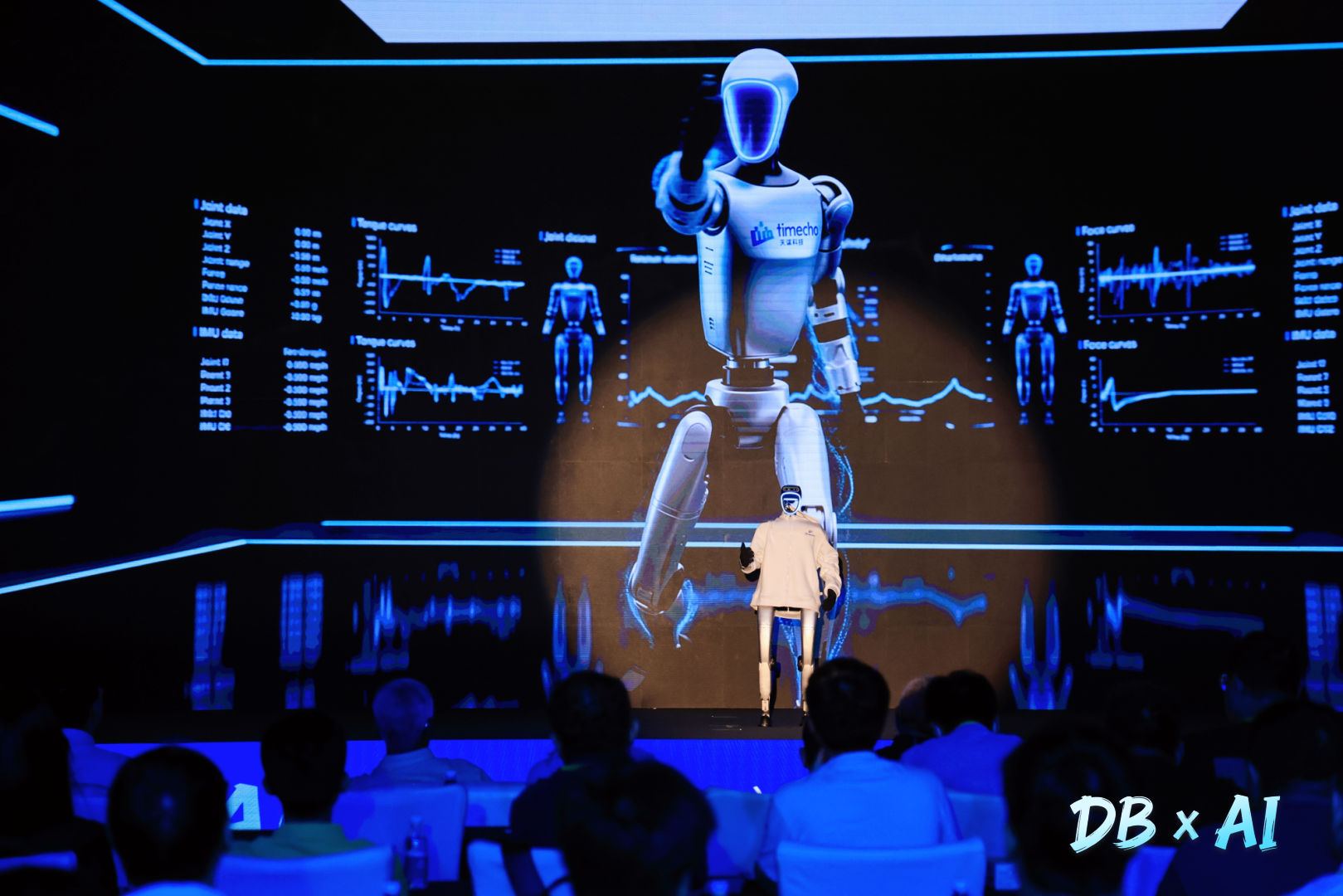
The summit opened with the short film Data Arrives On-Site. Drawing on real-world industrial sensor signals, the video illustrated the full lifecycle of time-series data: real-time generation, high-speed streaming, database ingestion and management, AI-powered analysis and prediction, and feedback to physical systems in wind power, energy storage, rail transit, smart manufacturing, and aerospace scenarios.
Humanoid robot Tico stepped onto the stage, bringing the data-driven concept to life. Real-time, multidimensional metrics, including joint dynamics and posture, were displayed on screen alongside live time-series prediction outputs powered by TimechoAI. A Jeet Kune Do performance further demonstrated the continuous generation, perception, and processing of high-velocity time-series data. This special opening offered a vivid on-site interpretation of the DB × AI theme.
Main Forum: Exploring the Next Frontier of DB × AI
The Main Forum opened with perspectives from leading experts on artificial intelligence, database technology, and industrial data.
Academician Jiaguang Sun of the Chinese Academy of Engineering and Hua Tu, deputy secretary-general of the China Institute of Communications, delivered the opening remarks.
You He, an academician of the Chinese Academy of Engineering and vice chairman of the Chinese Association for Artificial Intelligence, shared perspectives on the evolution and real-world adoption of artificial intelligence.
When Data Meets Intelligence
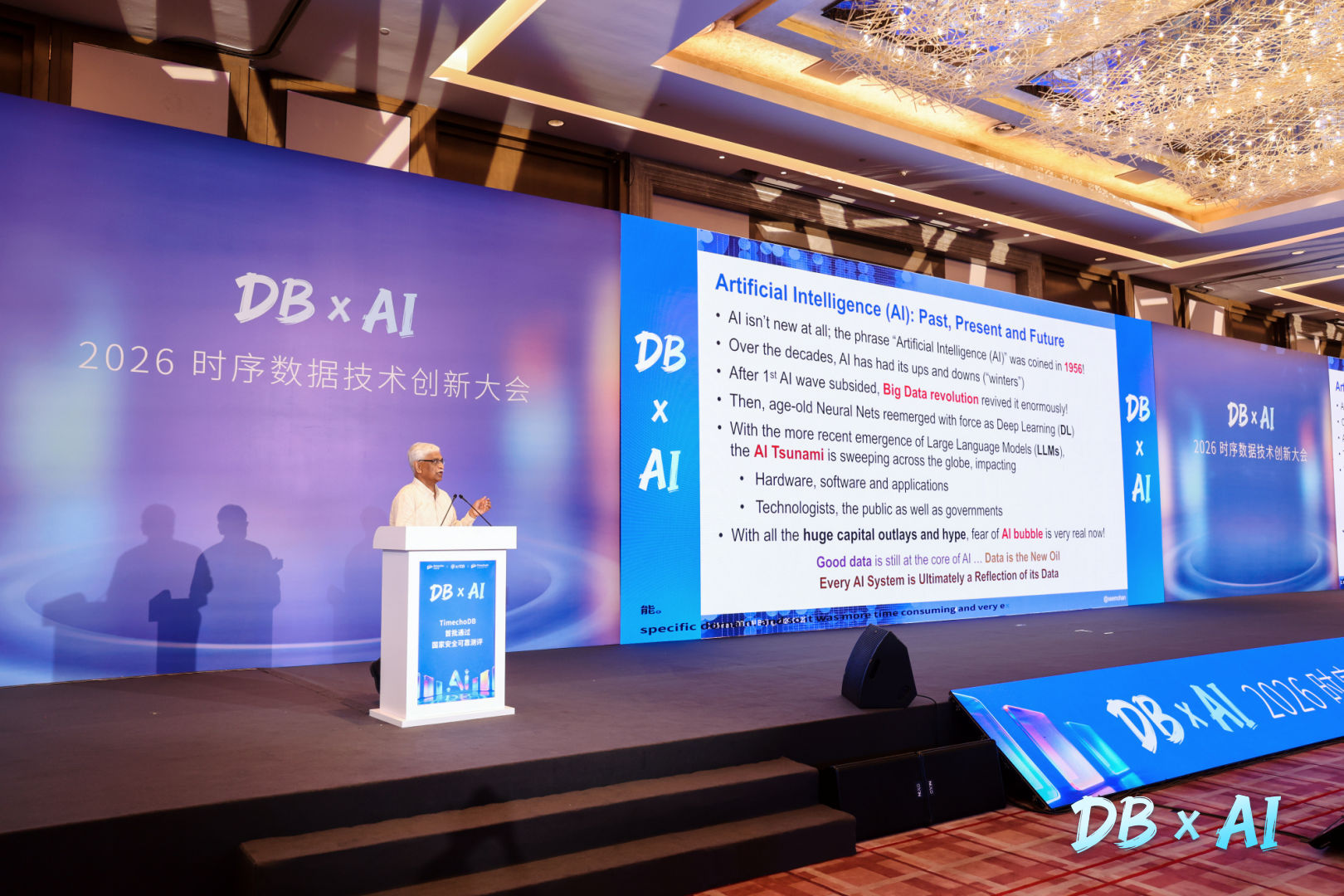
C. Mohan, a member of the U.S. National Academy of Engineering and a distinguished professor at Hong Kong Baptist University, offered a Silicon Valley perspective on DB × AI. He noted that “AI is becoming increasingly dependent on data” and that “there is major synergistic momentum in the database and AI worlds, and this is an exciting time for researchers as well as for the technologists building these things.” He emphasized the importance of high-quality data to AI progress and the need for closer collaboration between database and AI technologies, while pointing out persistent challenges involving performance, accuracy, privacy and security, cost, and system complexity.
Professor Jianmin Wang, Dean of the School of Software at Tsinghua University, shared insights into the immense value of industrial time-series data in the AI era. He also introduced the TsFile format and the intelligent applications of Apache IoTDB in industrial settings.
Building a Multimodal Data Intelligence Foundation
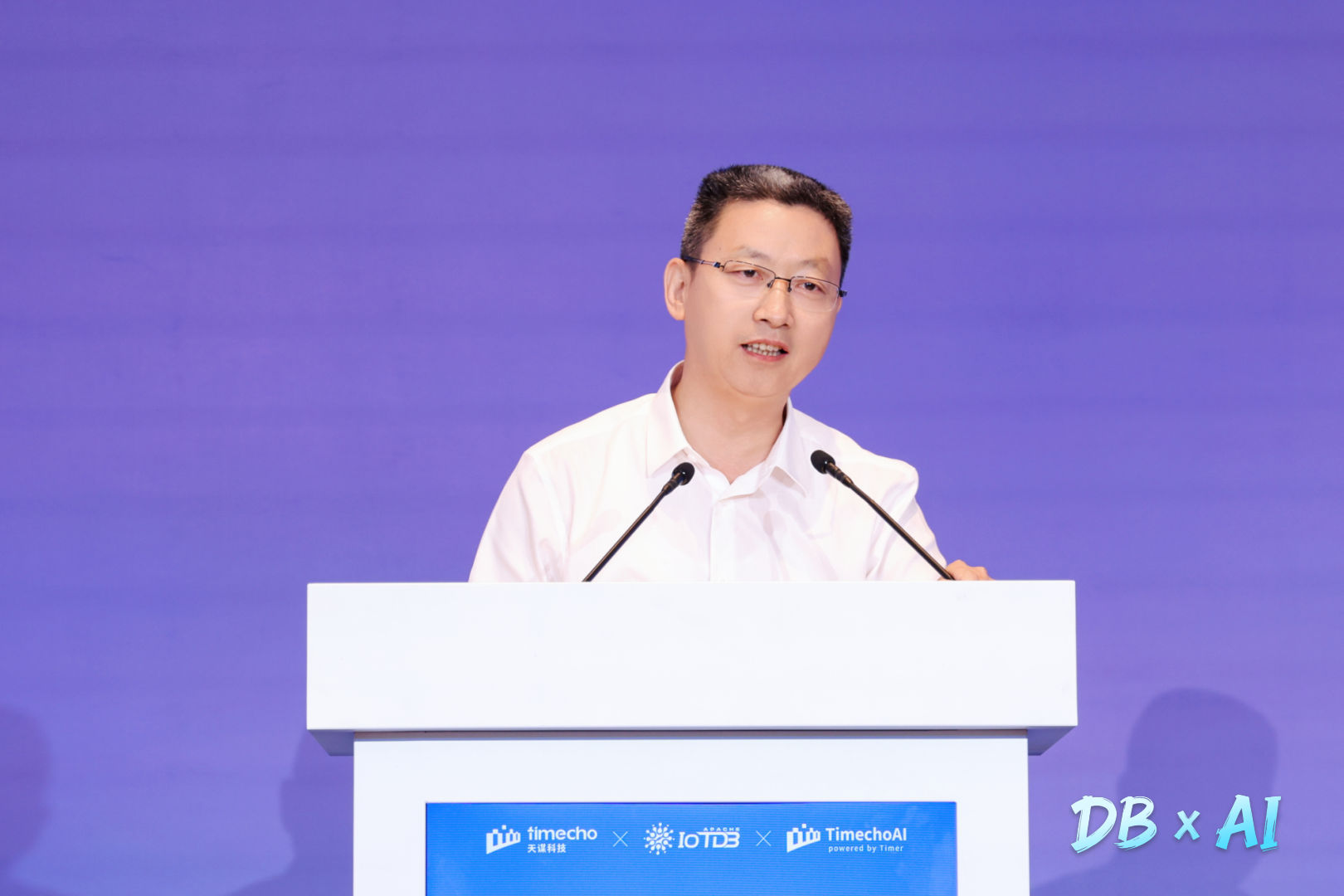
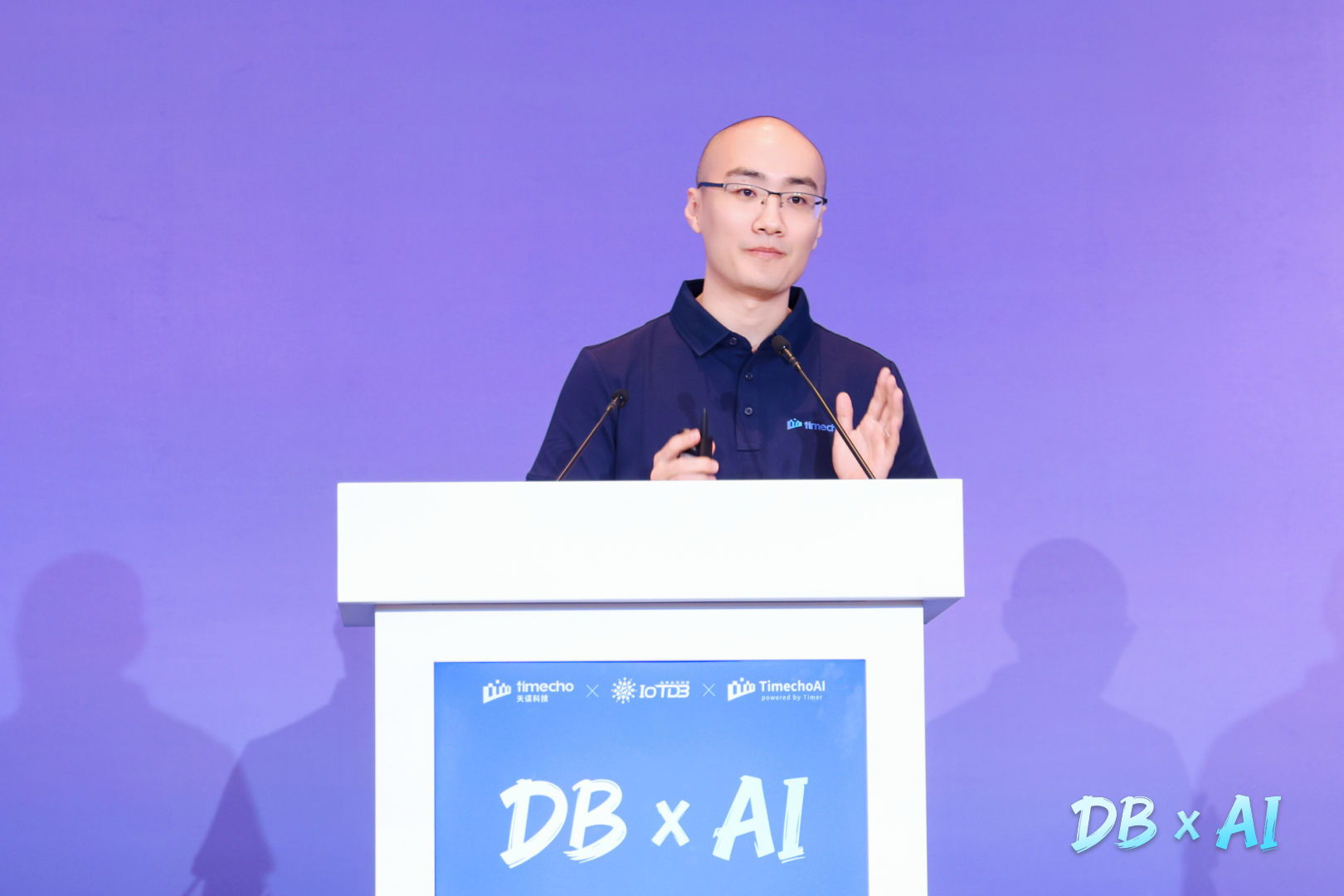
Dr. Jialin Qiao, CTO of Timecho, unveiled the newly released Multimodal Time-Series Data Intelligence Software Stack and presented Timecho’s latest DB × AI product roadmap. He highlighted how Timecho is extending its capabilities from time-series data management to multimodal data, time-series foundation models, and intelligent agents, building an increasingly integrated foundation for industrial data and AI applications.
Qiao emphasized that the next stage of database evolution lies in deeper integration with AI. As databases take on a greater role in industrial intelligence, they must also provide the secure, reliable, and production-ready foundation required for mission-critical environments.
From Technology to Industrial Practice
The Main Forum concluded with two real-world perspectives from enterprise practitioners.
Wenjun Huang, General Manager of the Data Intelligence Business Unit at CNPC Kunlun Digital Intelligence, introduced standardized data-acquisition practices across the oil, gas, and petrochemical value chain. These practices supported drilling-risk early-warning models with accuracy above 85%, as well as refining-process prediction and anomaly-diagnosis agents with accuracy above 95%.
Huan Zhang, a technical expert at China Southern Airlines, presented applications of Apache IoTDB for predictive aircraft maintenance. Built on Apache TsFile, the data infrastructure reduced the development cycle for fault early-warning models from hours to minutes, demonstrating how time-series data can enable more intelligent aircraft operations and maintenance.
DB × AI Industry Ecosystem Partnership Initiative
A key highlight of the summit was the official launch of the DB × AI Industry Ecosystem Partnership Initiative.
As DB and AI continue to converge, advancing the industry requires more than innovation from individual technologies or companies. It calls for collaboration across the entire value chain, from academic research and foundational hardware and software to databases, AI technologies, industrial software, and real-world applications. By connecting these capabilities, emerging technologies can be more effectively integrated and translated into practical industrial value.
The initiative is built around three interconnected layers of the DB × AI ecosystem. At the core is a technology innovation ecosystem driven by academic research, expert networks, and collaborative R&D. This is supported by a foundational hardware and software ecosystem encompassing chips and computing power, operating systems, data connectivity, databases and data platforms, AI infrastructure, and industrial software. Together, they support an industry application ecosystem spanning energy and power, aerospace, petrochemicals, advanced manufacturing, rail transit, and energy storage.
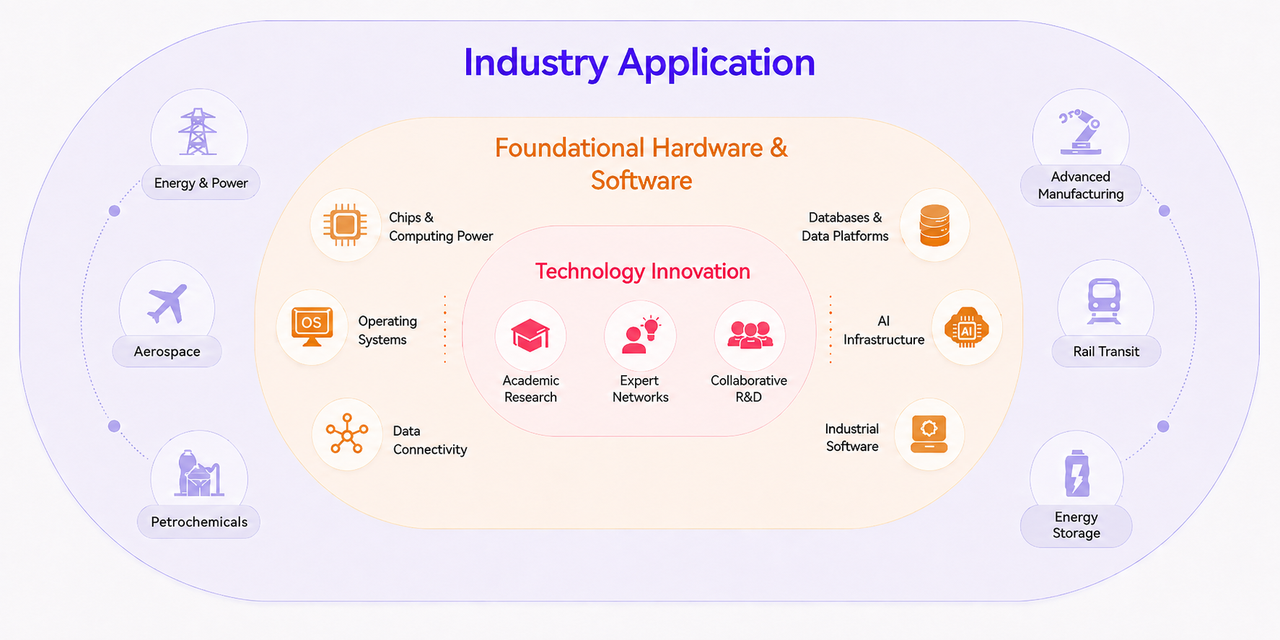
Against this broader ecosystem framework, the launch ceremony brought together leading experts and representatives from academia, foundational technology providers, database and AI companies, industrial software developers, and vertical industries to explore opportunities for collaboration and joint innovation.
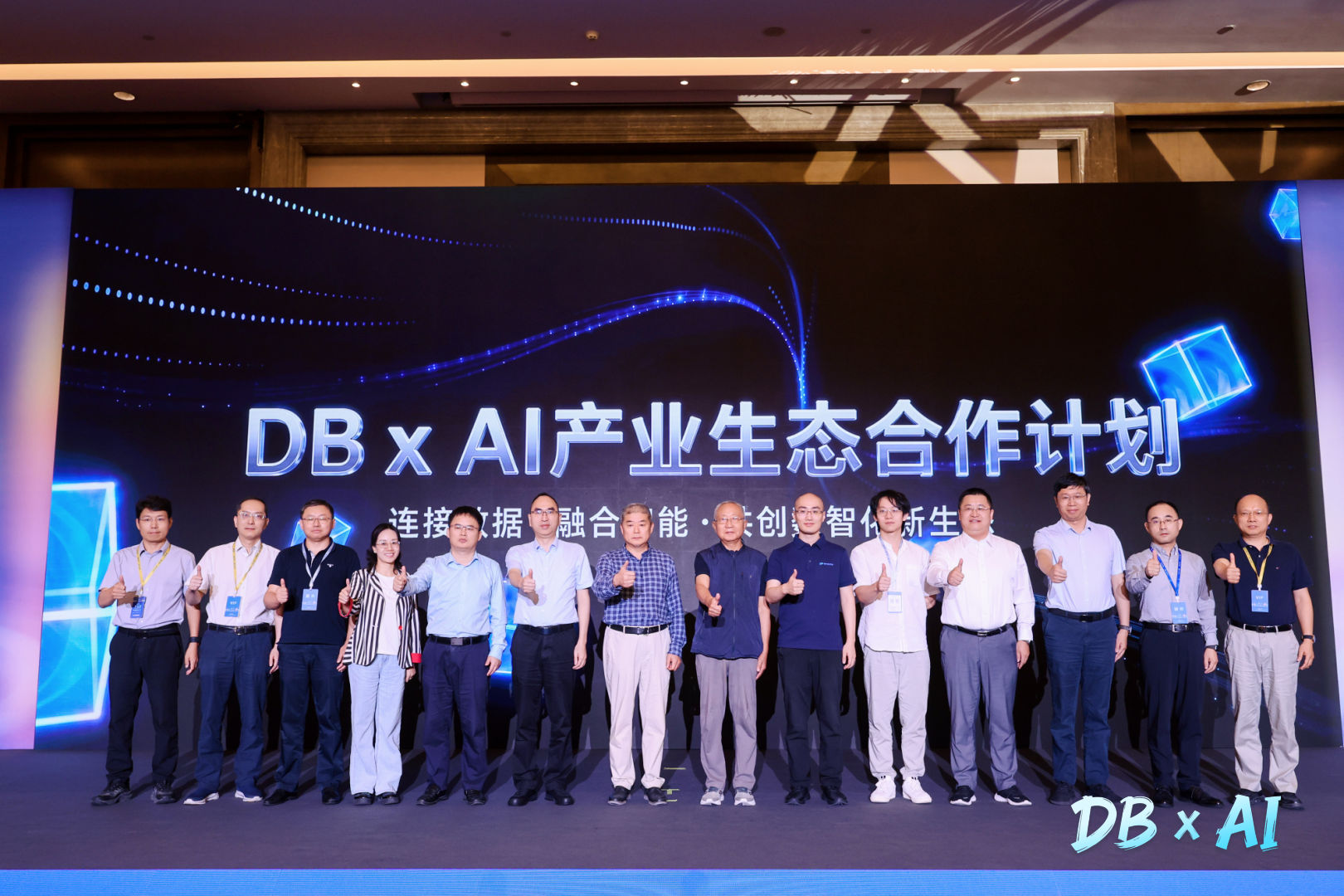
For Timecho, the initiative marks an important step toward a more open and collaborative DB × AI ecosystem. By connecting more partners and technologies, Timecho aims to accelerate joint innovation, facilitate technology integration, and scale DB × AI into practical solutions that create tangible value across industries.
Technical Forum: Building the Technology Stack for DB × AI
If the Main Forum focused on why DB × AI matters, the Technical Forum focused on how it can be built.
The afternoon technical sessions presented a systematic view of the technology stack behind intelligent time-series applications. With Apache TsFile serving as a unified time-series file layer across edge and cloud environments, the stack brings together three core components—TimechoDB, TimechoAI, and TimechoAgent—forming an end‑to‑end capability chain that spans data governance, model training and inference, and intelligent application delivery.
A Three-Layer Technology Stack for DB × AI
TimechoDB serves as the data foundation, extending beyond traditional numerical time-series data to support multimodal inputs, including images, audio, and video. Its Object data type enables unified time-axis modeling and joint analysis across modalities. The platform also strengthens enterprise-grade security through identity authentication, access control, and data encryption.
TimechoAI provides the AI foundation, powered by the Timer series of time-series foundation models. It streamlines workflows spanning data assessment, data governance, model training, inference, and evaluation. By enabling enterprises to train proprietary time-series models on private operational data, TimechoAI lowers the barriers to bringing industrial data into AI training and inference workflows.
TimechoAgent connects databases, AI models, and human operators at the application layer through Skills, CLI, and MCP interfaces. It can automate tasks such as data querying, data-quality assessment, model prediction, and writing results back to source systems, helping close the gap between database capabilities and AI-powered applications.
From collecting and governing multimodal time-series data, to training and deploying time-series foundation models, and ultimately delivering intelligent applications, the architecture is designed to connect data and intelligence across the full workflow.
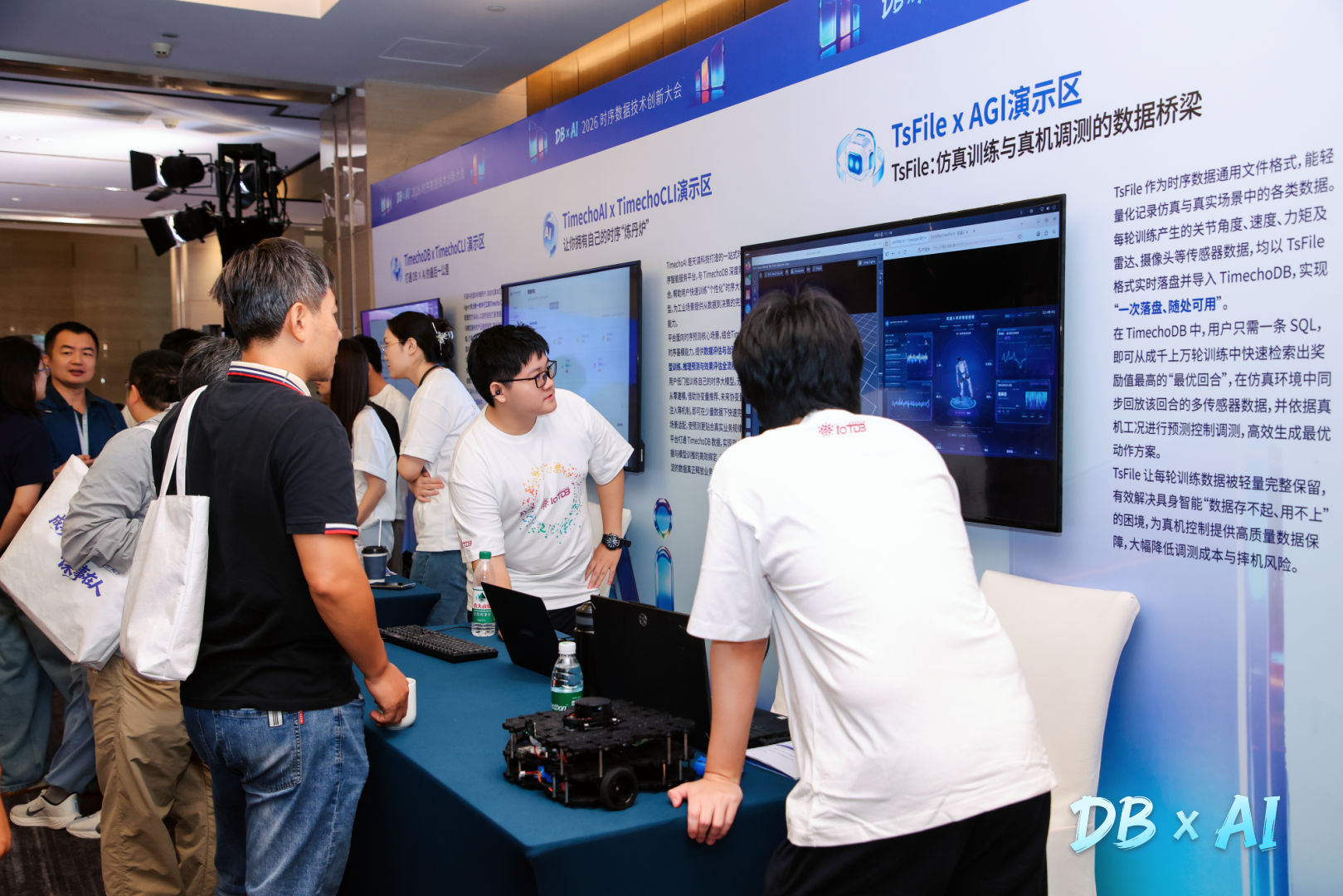
To bring this full‑workflow architectural vision into practice, three featured demo themes were available for developers and guests:
TimechoDB × TimechoCLI: Closing the Last Mile for DB × AI
TimechoAI × TimechoCLI: Building Your Private Time‑Series “AI Training Lab”
TsFile × AGI TsFile: Data Bridge for Simulation Training and Real-World System Tuning
Technical Insights and Discussions from Frontline Engineers
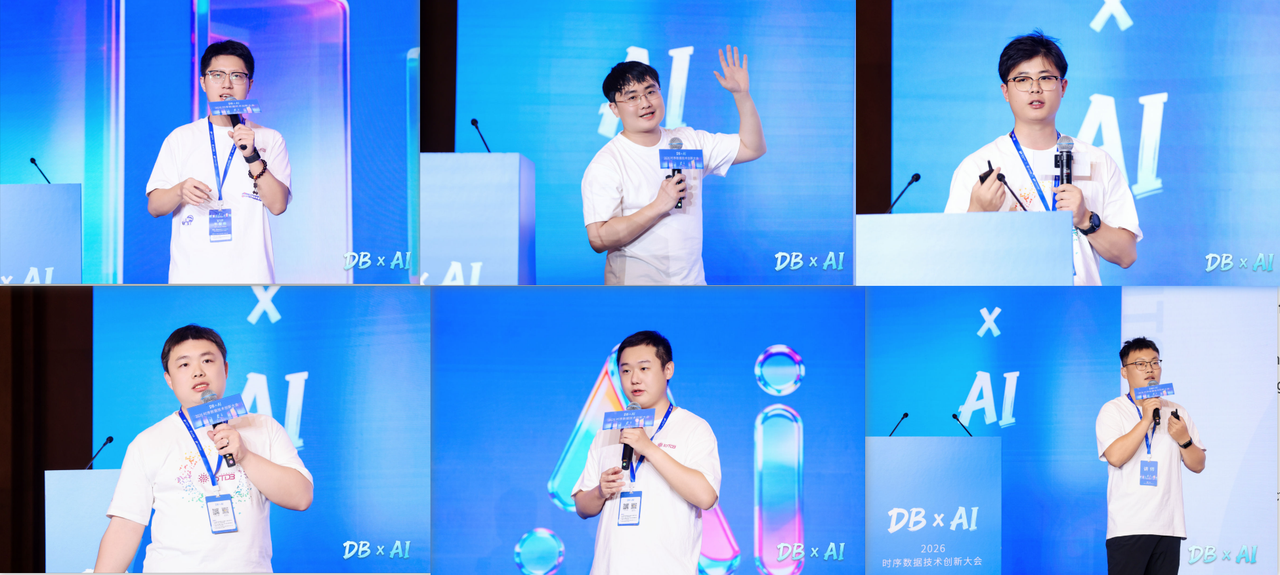
The technical forum also brought together R&D engineers from Timecho and members of the Apache IoTDB community to share their latest technical practices and insights on DB × AI.
Yuan Tian, a Database Kernel Engineer at Timecho and an Apache IoTDB PMC Member, explored how time-series databases can evolve to support multimodal industrial data.
Rongzhao Chen, an AI Engineer at Timecho and an Apache IoTDB PMC Member, introduced the infrastructure required for training and inference of time-series foundation models.
Shuolin Li, a Database Kernel Engineer at Timecho and an Apache TsFile PMC Member, discussed how Apache TsFile integrates into the AI data ecosystem.
Xuan Wang, a Full-Stack Engineer at Timecho and an Apache IoTDB PMC Member, explored AI tools that bridge the last mile between databases and AI.
Haonan Hou, a Database Kernel Engineer at Timecho and an Apache IoTDB PMC Member, shared Timecho's practices in security hardening and vulnerability management in TimechoDB.
Zhijia Cao, a Database Kernel Engineer at Timecho and an IoTDB Project Delivery Lead, discussed the underlying principles and practical approaches to IoTDB performance optimization and tuning.
Industry Case Studies: Turning Time-Series Data into Industrial Value
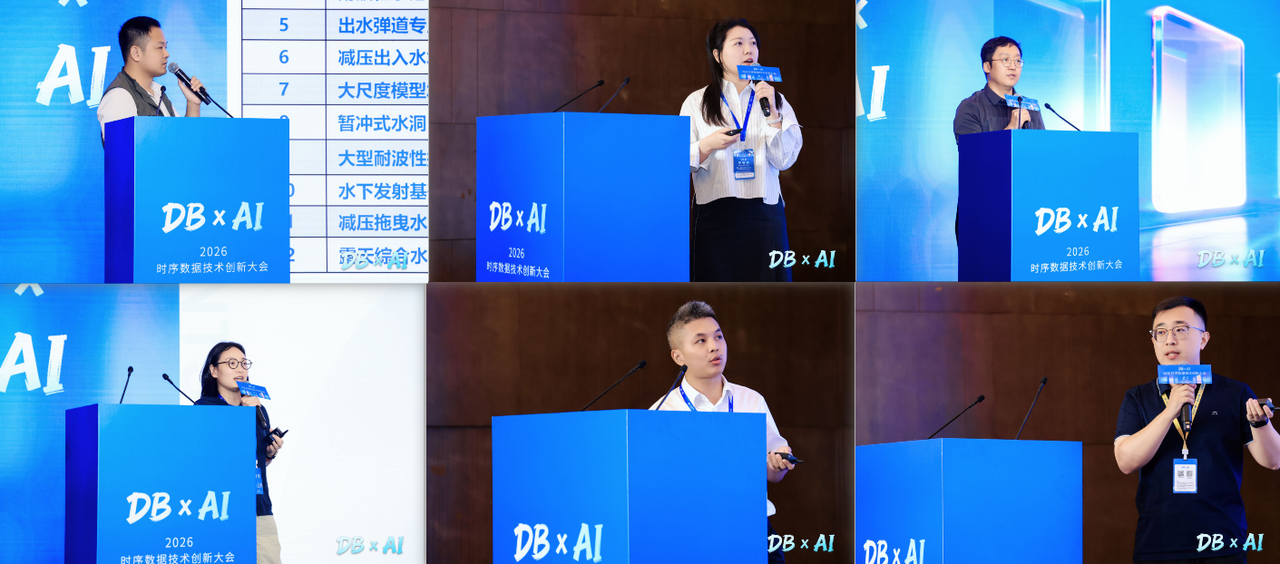
The two case study forums brought together frontline experts and practitioners from sectors including energy and power, new energy, shipbuilding, photovoltaics, oil and gas, energy storage, intelligent computing, and scientific research. Drawing on first-hand project experience, the speakers shared how time-series data technologies are being applied to address real-world challenges, demonstrating the practical value of time-series data technologies, including Apache IoTDB, across industrial scenarios.
Case Study Forum 1 featured speakers from the China Ship Scientific Research Center, Energy China Energy Research Institute, Hygon Information Technology, Southeast University, Shanghai Jiudao Information Technology, CISDI Information Technology, and the China University of Geosciences. Their presentations demonstrated the breadth of time-series database applications across different domains.
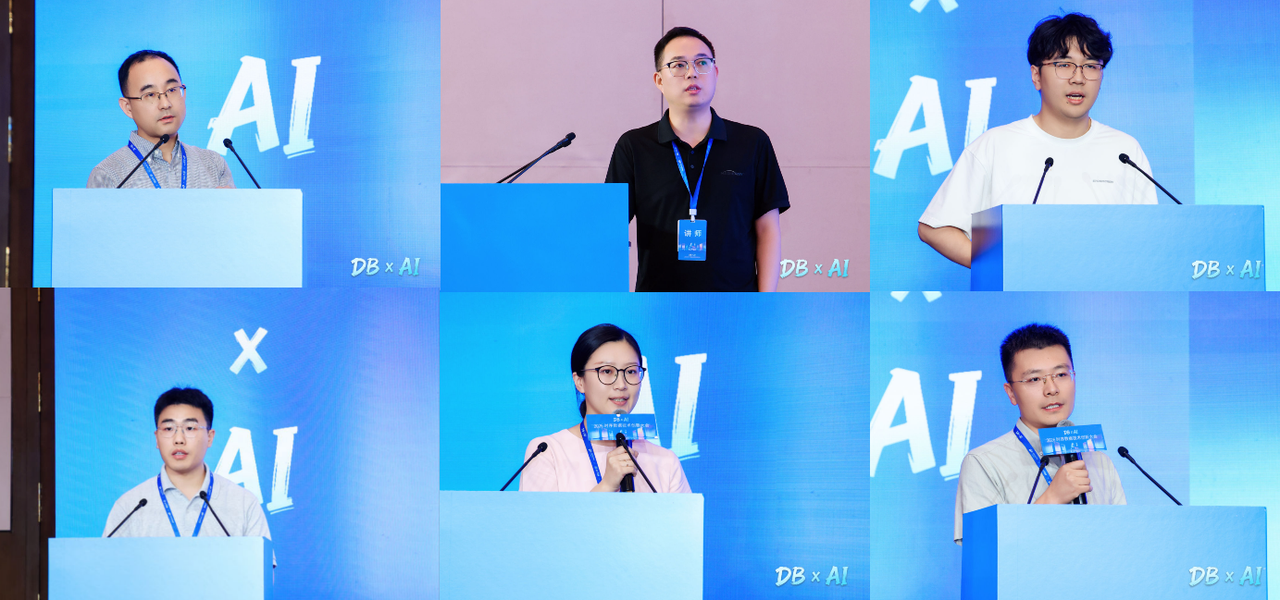
Case Study Forum 2 brought together experts and practitioners from the Qinghai Photovoltaic Industry Innovation Center, Qinghai Yellow River Smart Energy Technology, Ketr Technology, Makesense Energy, Tsinghua University, Nanjing Tianfu Software, Harbin Institute of Technology, and Qingdao University of Technology. Their discussions explored practical applications in photovoltaic and energy-storage systems, oil-and-gas pipeline monitoring, energy storage data management, spatiotemporal forecasting, industrial AI infrastructure, cloud-edge-device scenarios, and intelligent industrial assessment.
Together, these cases demonstrated how DB × AI can connect data infrastructure with intelligent applications in real-world IoT environments. From data access and management to forecasting, monitoring, optimization, and intelligent decision-making, they showed that the value of DB × AI lies not only in advancing database and AI technologies separately, but also in bringing them together to address concrete industry needs and create measurable value.
Looking Ahead
Collectively, the summit sessions laid out a clear shift: DB × AI is moving from isolated technology experiments toward integrated data and AI infrastructure—and from infrastructure toward real-world industrial applications
Industrial systems keep generating massive, complex, and multimodal time‑series data at growing scale, driving the evolution of time‑series databases. Tomorrow’s databases will go well beyond basic data storage. They will structure datasets for AI workflows, bridge raw data with foundation models, underpin end‑user intelligent applications, and empower enterprises to turn endless streams of time‑series signals into actionable, business‑driving intelligence. This marks the next frontier for DB × AI — and it is just the beginning of the journey.
We sincerely thank everyone for sharing insights, presenting field-proven practices, and engaging in in-depth exchanges throughout the event.
Moving forward, Timecho will continue to deepen innovation at the intersection of time-series data and artificial intelligence. Centered on its multimodal time-series data intelligence software stack, Timecho will continue refining its full-stack product and technology ecosystem, covering data management, model training and inference, and intelligent application delivery. Working side by side with users, developers, and industry collaborators, Timecho will accelerate the real-world adoption of secure, robust DB × AI solutions across a broader range of industries, unlocking usable, actionable intelligence from every stream of time-series data.
We look forward to reconnecting with the community at future summits to keep exploring the possibilities of DB × AI together.


